
Jane Harris & Jimmy Edmonds
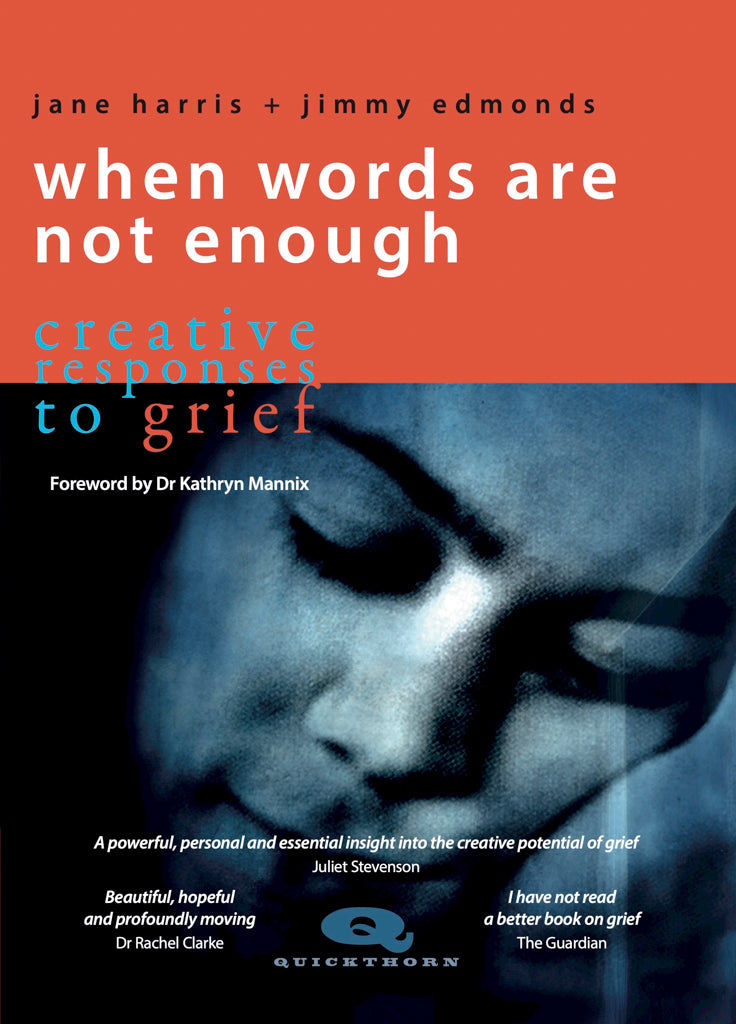
When Words Are Not Enough
When Words Are Not Enough
Couldn't load pickup availability
Jane Harris is a psychotherapist and bereavement specialist. Jimmy Edmonds is a photographer and documentary film editor with over 100 credits on TV productions including the BAFTA winning for Channel 4. Together they run Active Grief Retreats as The Good Grief Project. This is their first book, exploring active and creative responses to grief and how they can help you to survive.
‘I have not read a better book on grief.’ Annalisa Barbieri, The Guardian
Everyone grieves for someone at some point in their lives. But how do we deal with the silence that often surrounds grief? How do we find ways to express painful feelings when words are not enough? In this deeply personal and beautiful reflection on grief Jane Harris and Jimmy Edmonds draw on their own experience of loss, and how the death of their son Josh has led to a creative response that is more than word bound.
In 2011 Jane Harris and Jimmy Edmonds’ son Joshua died in a road accident while travelling in Vietnam. In the years that followed they founded The Good Grief Project, a UK based charity to support other bereaved families and to promote their understanding of grief as creative and active process. This book follows their journey. It also tells the story of 13 other bereaved people who have also found a creative response to their grief.
The emphasis on 'continuing bonds' and their own way of maintaining a relationship with Josh, is both emotional and practical. Echoed in the other case studies they illustrate how creativity can shape a future where the deceased still play a part even while physically absent and how this is a normal and restorative aspect of the grieving process. Grief can also be a wonderful educator with new discoveries to be had.
Dotted throughout the book you will find boxes with reflections on current theories, and which explain the jargon you may hear used about grief. In the ‘Ten Things we have Learned’ the authors share the most useful things they found on their own bereavement journey. Eleven years on they have discovered how grief is almost by definition a creative process, one of making things anew that would not have existed had their son not died.
‘This is a book about sorrow, yet it is brimming with hope. This is a book about loss, but it overflows with love and generosity. The community of bereaved people is as diverse as humanity itself, and this book is a gathering of their wisdom, guided and curated by the creative talents and parental grief of Jane Harris and Jimmy Edmonds.’ Dr Kathryn Mannix, author of With the End in Mind and Listen
‘In the absence of any collective rituals or words with which to express their loss, this wonderful and very personal book offers those who find themselves in an agonising wilderness of grief, a kind of creative map to find a way out of the isolation.’ Juliet Stevenson, Actor
‘When Words are Not Enough shows us that searing loss isn’t necessarily the end, but a possible beginning. It’s an exploration with whatever means one has at one’s disposal – visual arts, the written word, even wild swimming – to mark, mourn, remember, salve and to create a tangible from a loss, some order from the arbitrary.’ Greg Wise, Actor
‘The word I keep coming back to with this book is beautiful, not a word I would usually associate with grief. But this book is rich in detail and compassion, it is authoritative and kind. Through their immense loss and pain Jane and Jimmy have done an extraordinary thing and redefined grief as love turned inside out. They make grief less scary. I have not read a better book on grief.’ Annalisa Barbieri, The Guardian
‘When Words are Not Enough offers that rarest of bereavement resources – a visual and verbal feast and a sustained look into the heart of grief that both acknowledges the raw anguish of tragic loss and invites the reader to share a fascinating and varied gathering of responses to it. I recommend it highly to all those who mourn, and all those who strive to accompany them through the experience.’ Prof Robert Neimeyer, Director, Portland Institute for Loss and Transition
Shipping & Returns
Shipping & Returns
We post our books in plastic free materials using Royal Mail. Please allow 5 days for delivery (though most will come sooner than that).
It’s only me, so please be patient. If I’m away I’ll post that online 😎 and there may be a hiatus.
Local pick up in Stroud: free
UK: £3.99
Europe: £12.00
US and Canada: £15
RETURNS POLICY
ISBN: 978-1-912480-57-9
Published: October 2022
Share
I am so glad I came across this book. It’s a beautifully written and gentle combination of so many different aspects of losing someone, the emotional and the practical. Amongst other things, it helps build a better understanding of the process of grieving, provides inspiring stories of how people have found support and meaning through creative exploration and gives insights on how to respond to someone who is coping with loss. The Good Grief Project charity set up by the authors sounds like a lifeline for anyone who has suffered this most harrowing of experiences.
After losing my daughter suddenly at the age of 21, I was struggling with talking therapy and found groups so depressing. This book was a ray of sunshine in the gloom, it helped me see a future with Grace still in it. Using more creative and active ways to include her in my life going forward. Thank you for sharing your story of Josh and showing us a way to move forward.
This book and it’s gentle dips into the theory of loss, individual stories and practical advice offered me so much, both in the context it is set of losing a child, then extrapolating it more widely leading me to reflect on my responses to the losses I have experienced encouraging me to consider an acute untimely loss and then my own death and assumptions in a way I have not done before. I have been able to share the practical tips with my three sons who are in their twenties as I so wish I had registered earlier the simple message of don’t run away from someone’s grief, whilst words might not be needed, connection and saying their name is.
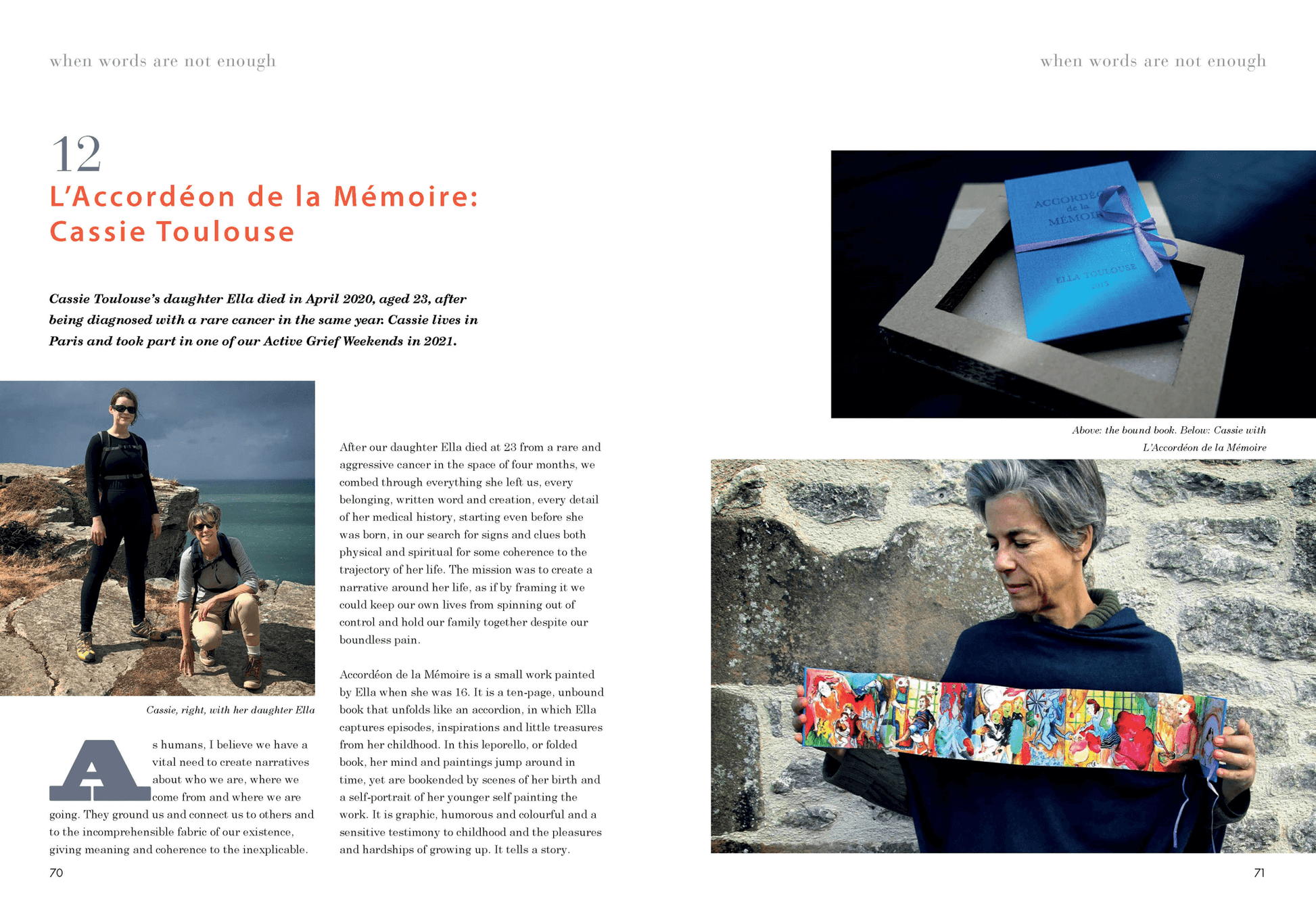
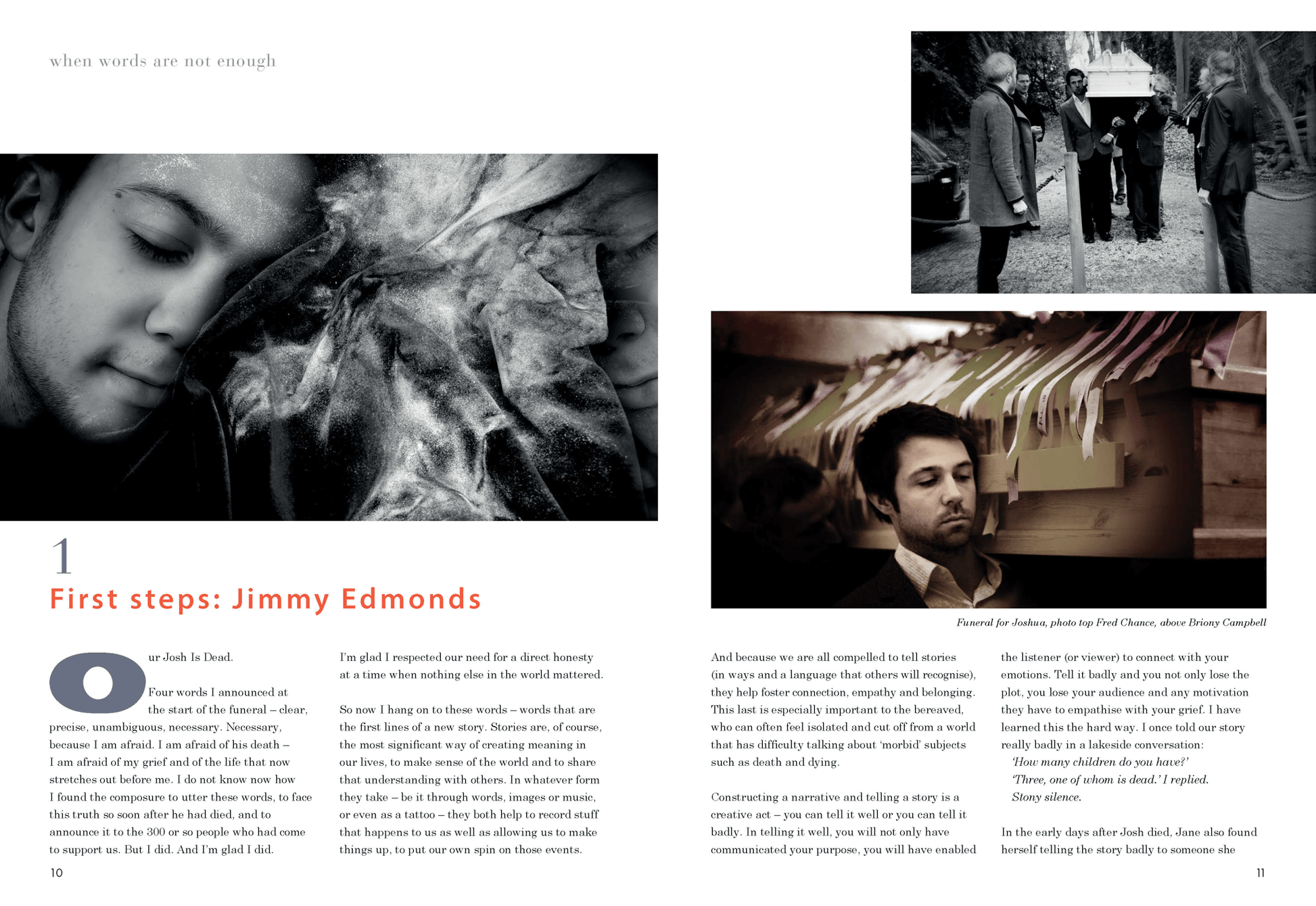
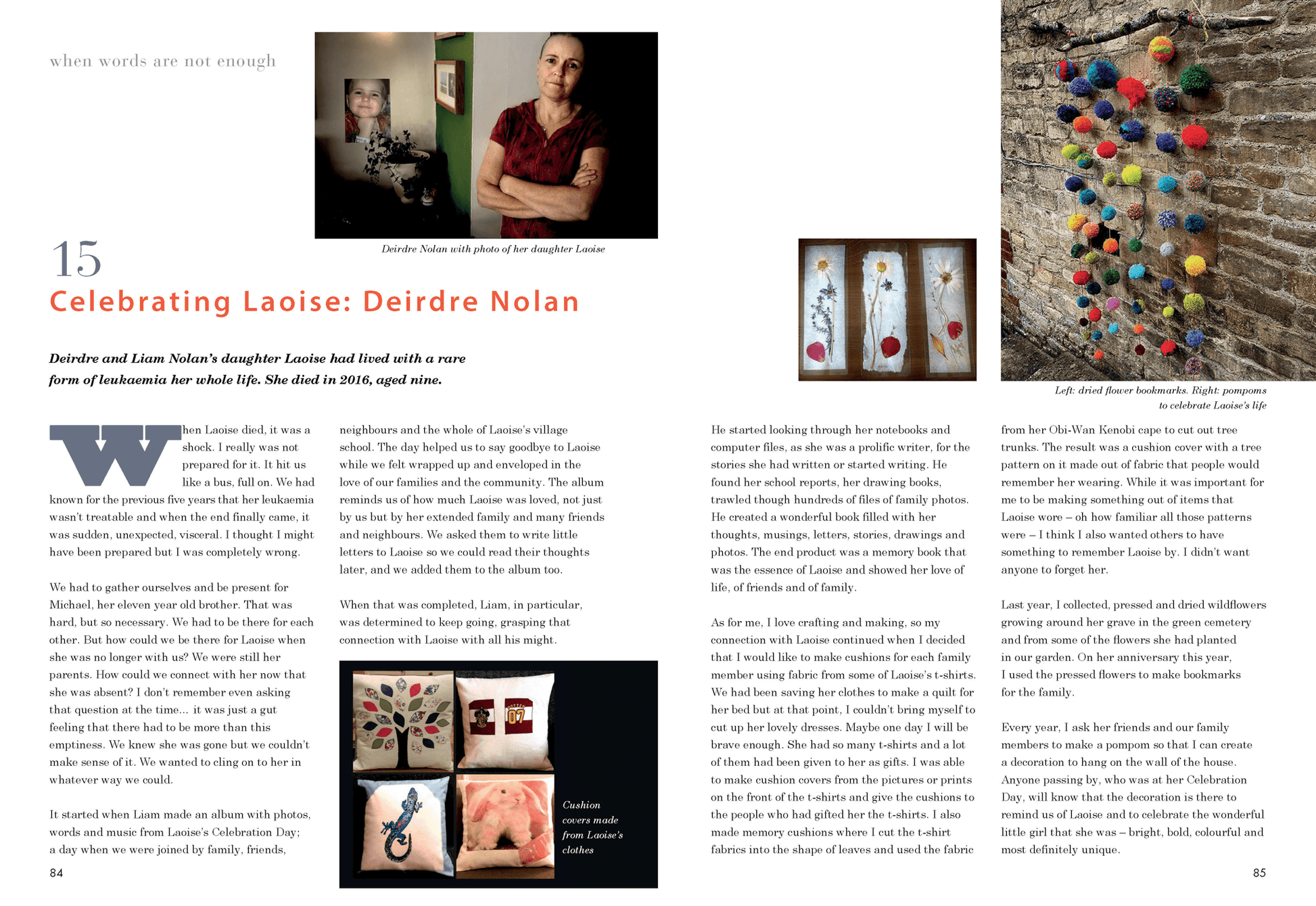
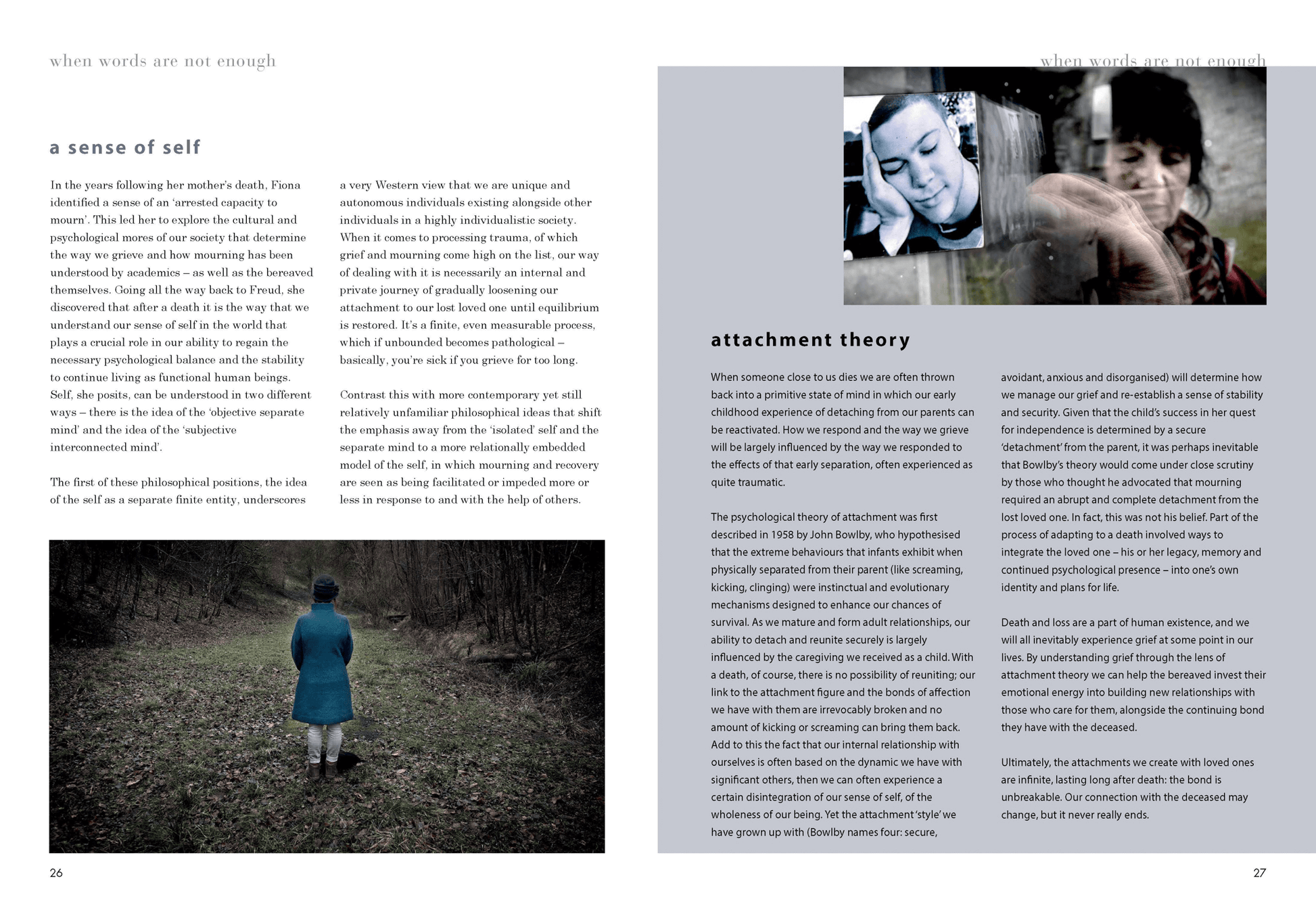
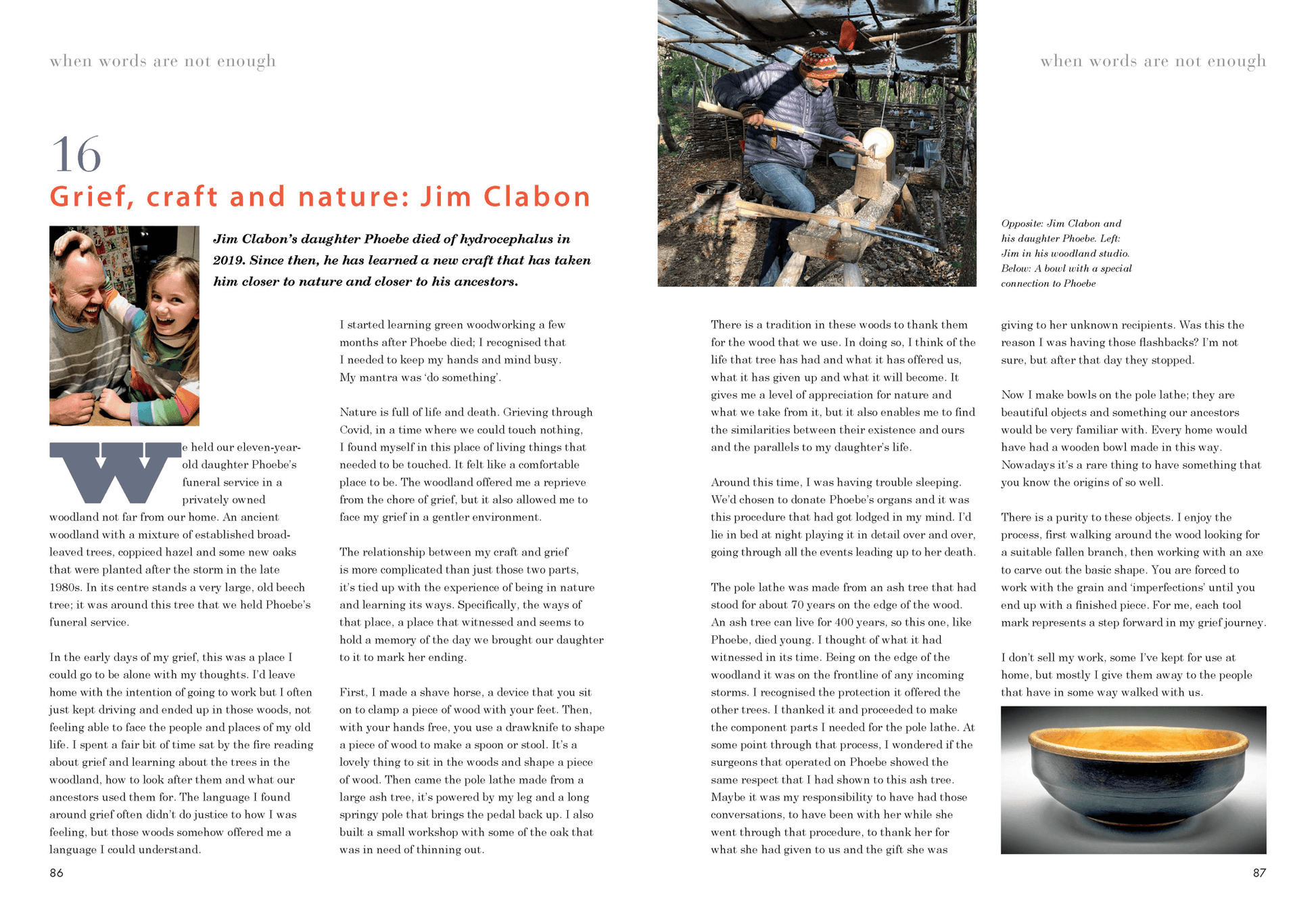
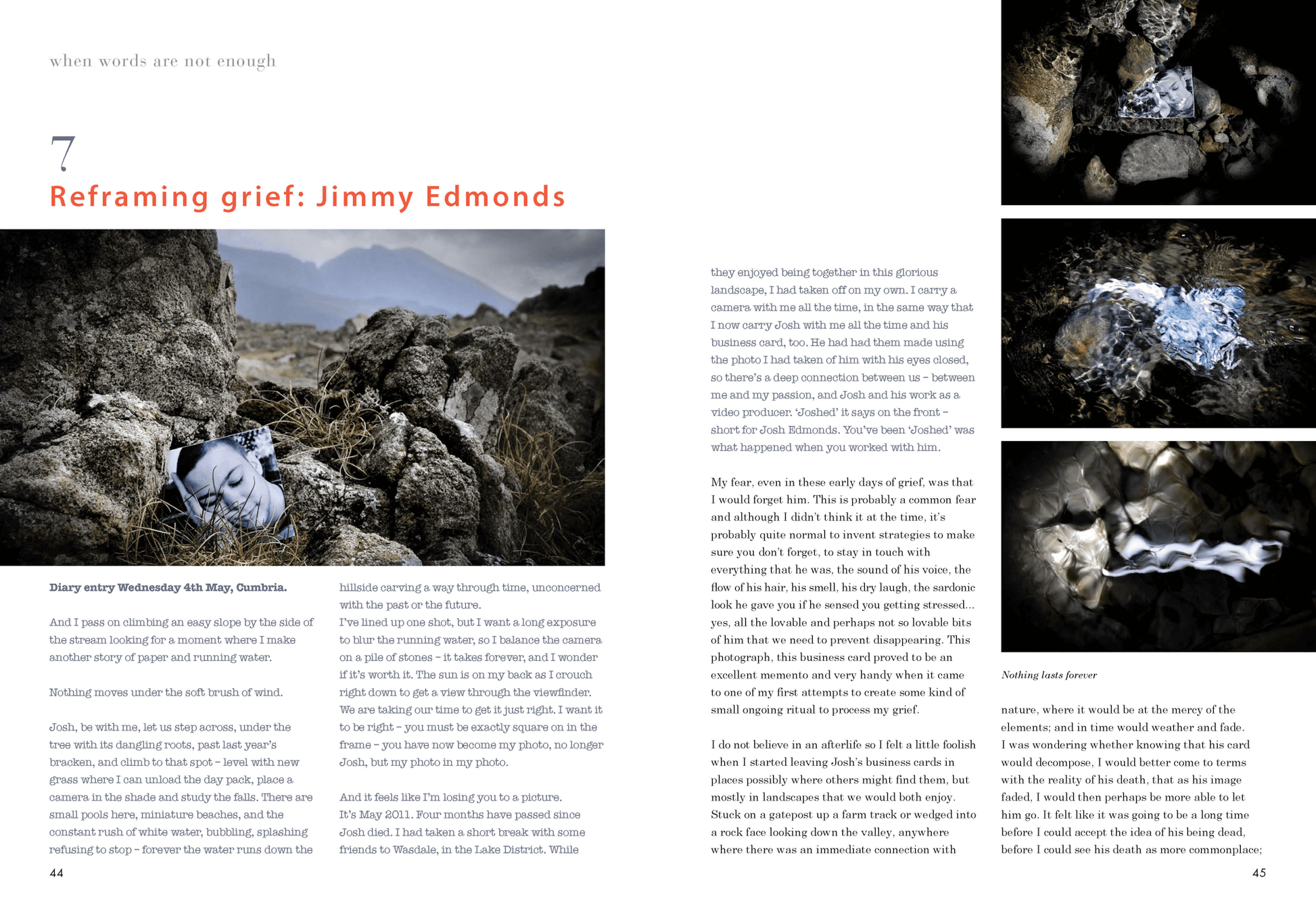
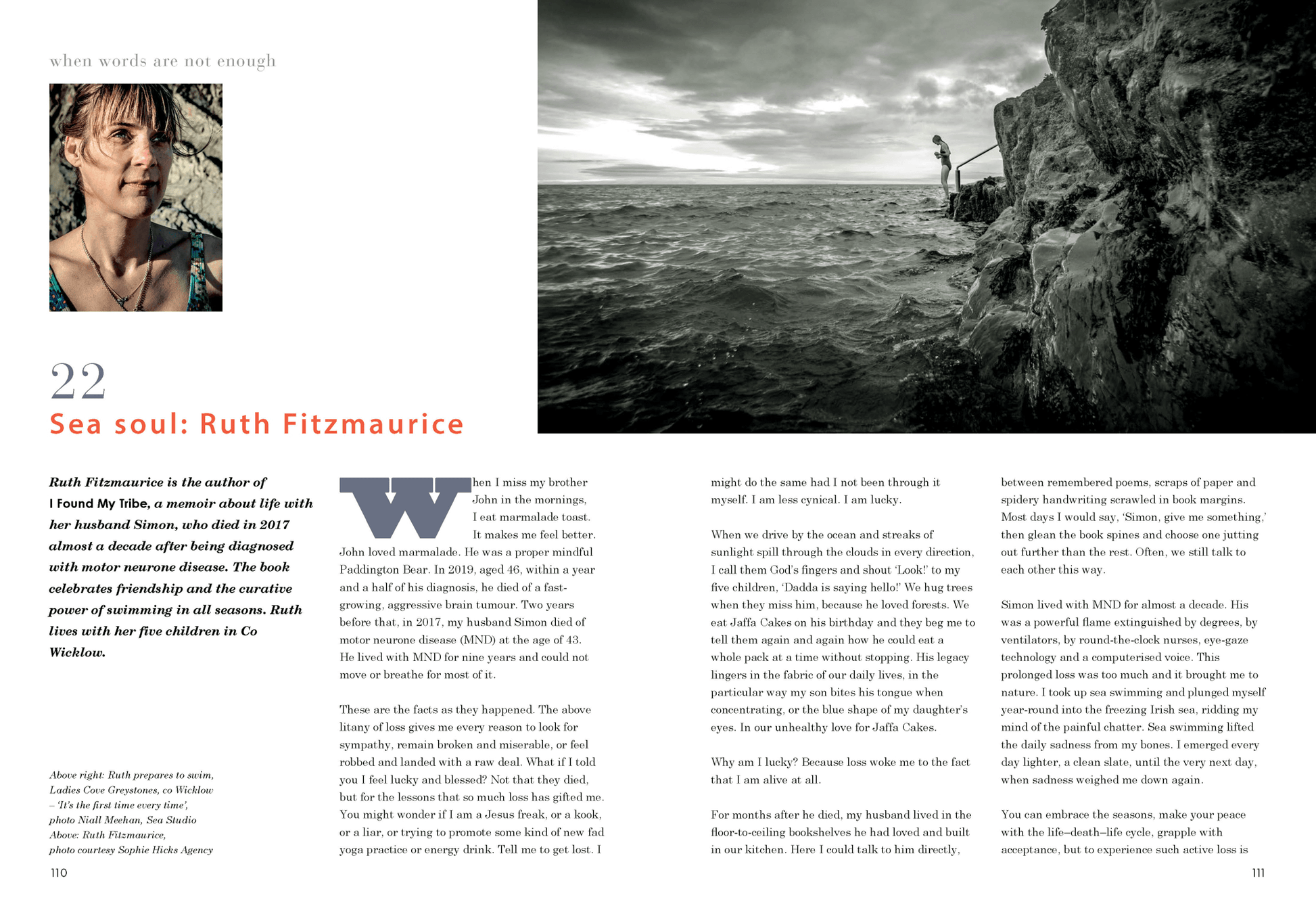
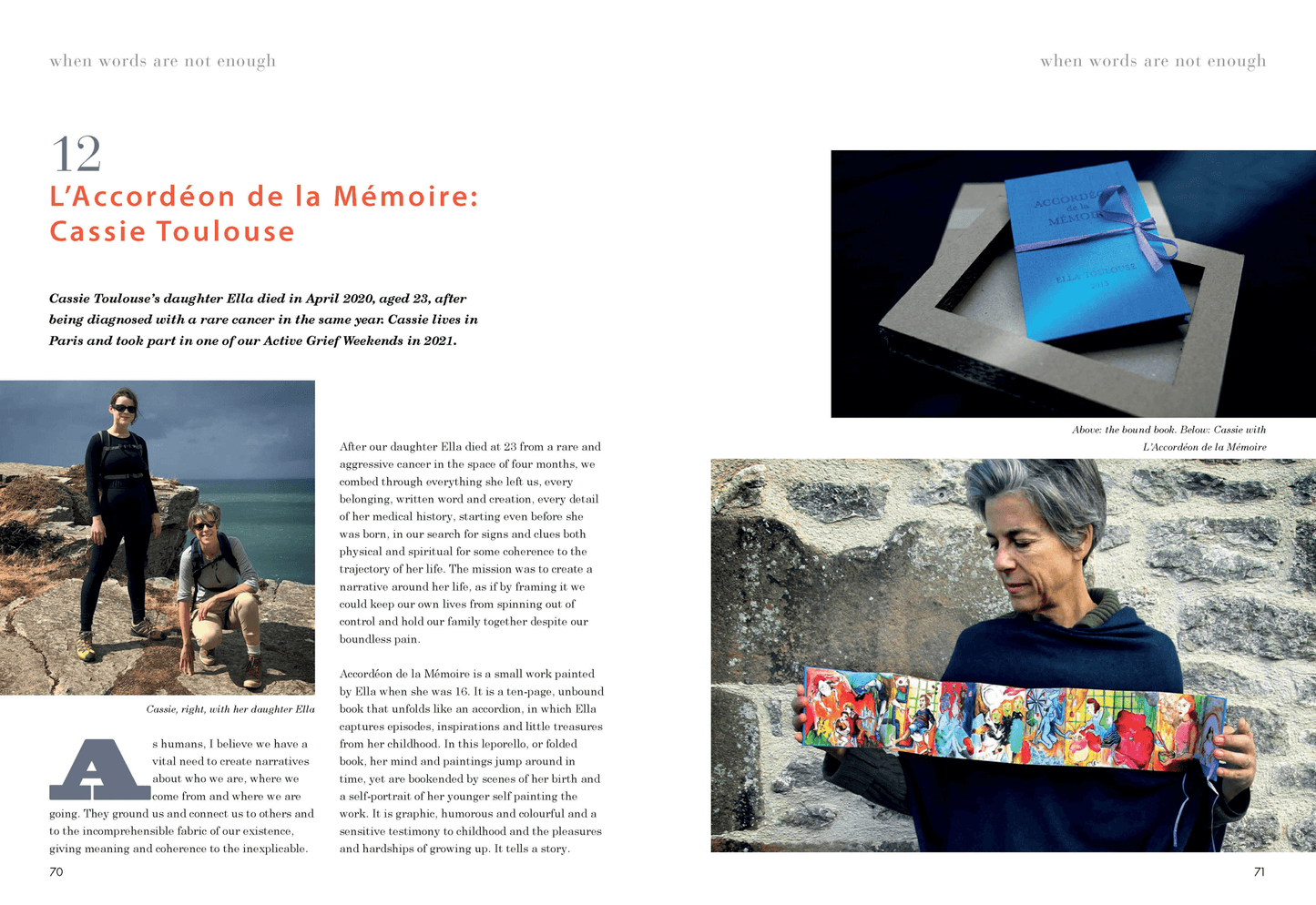
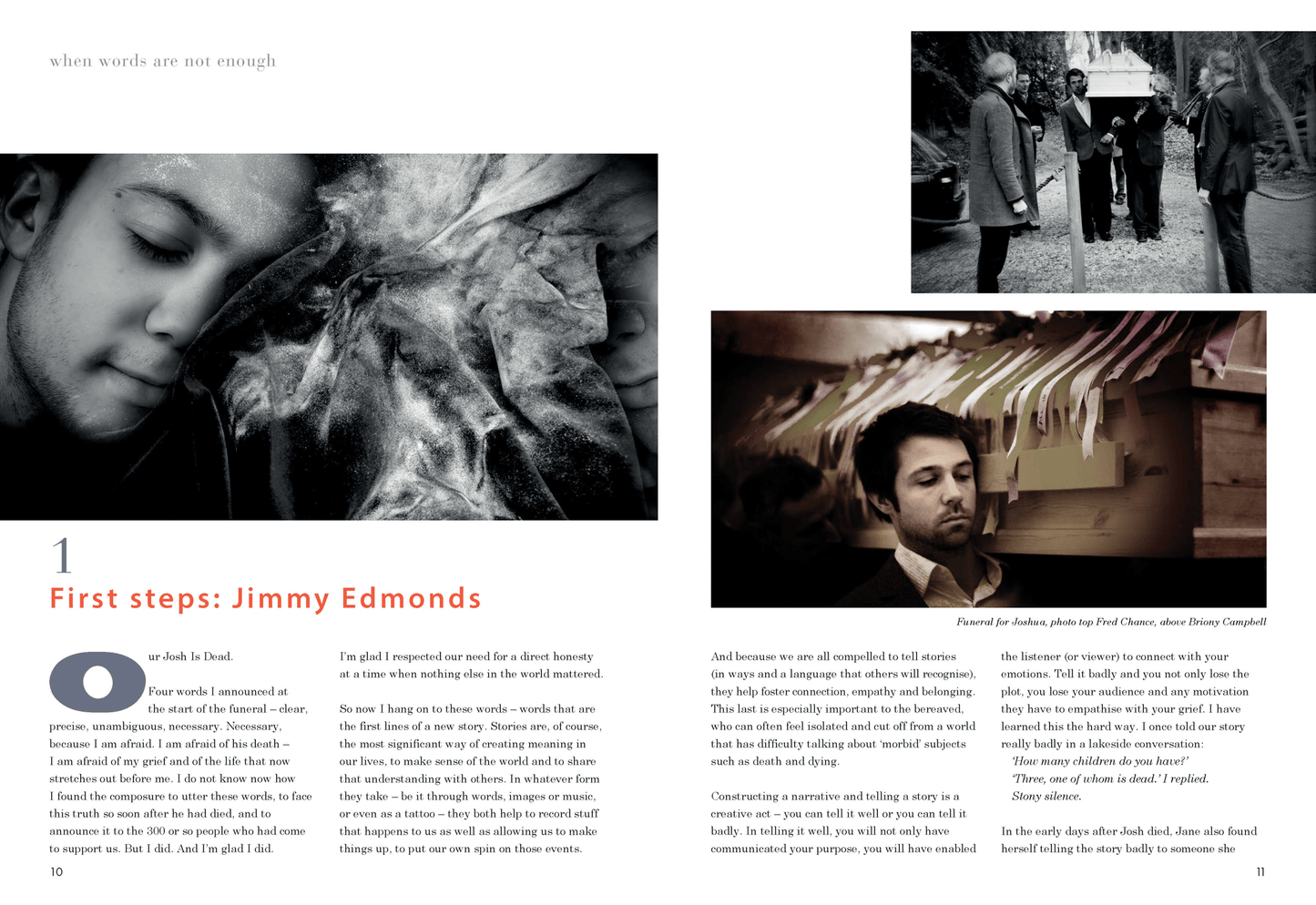
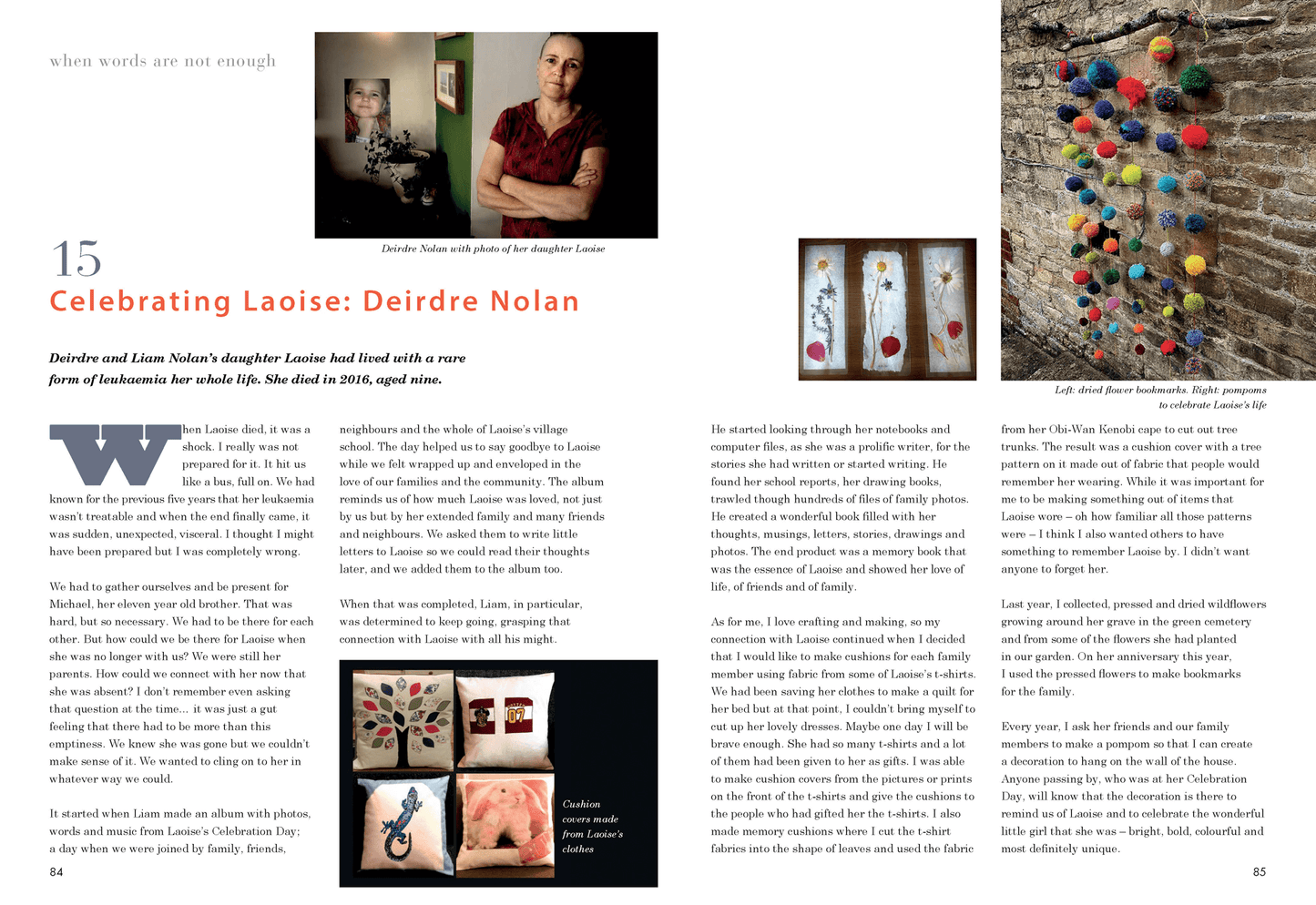
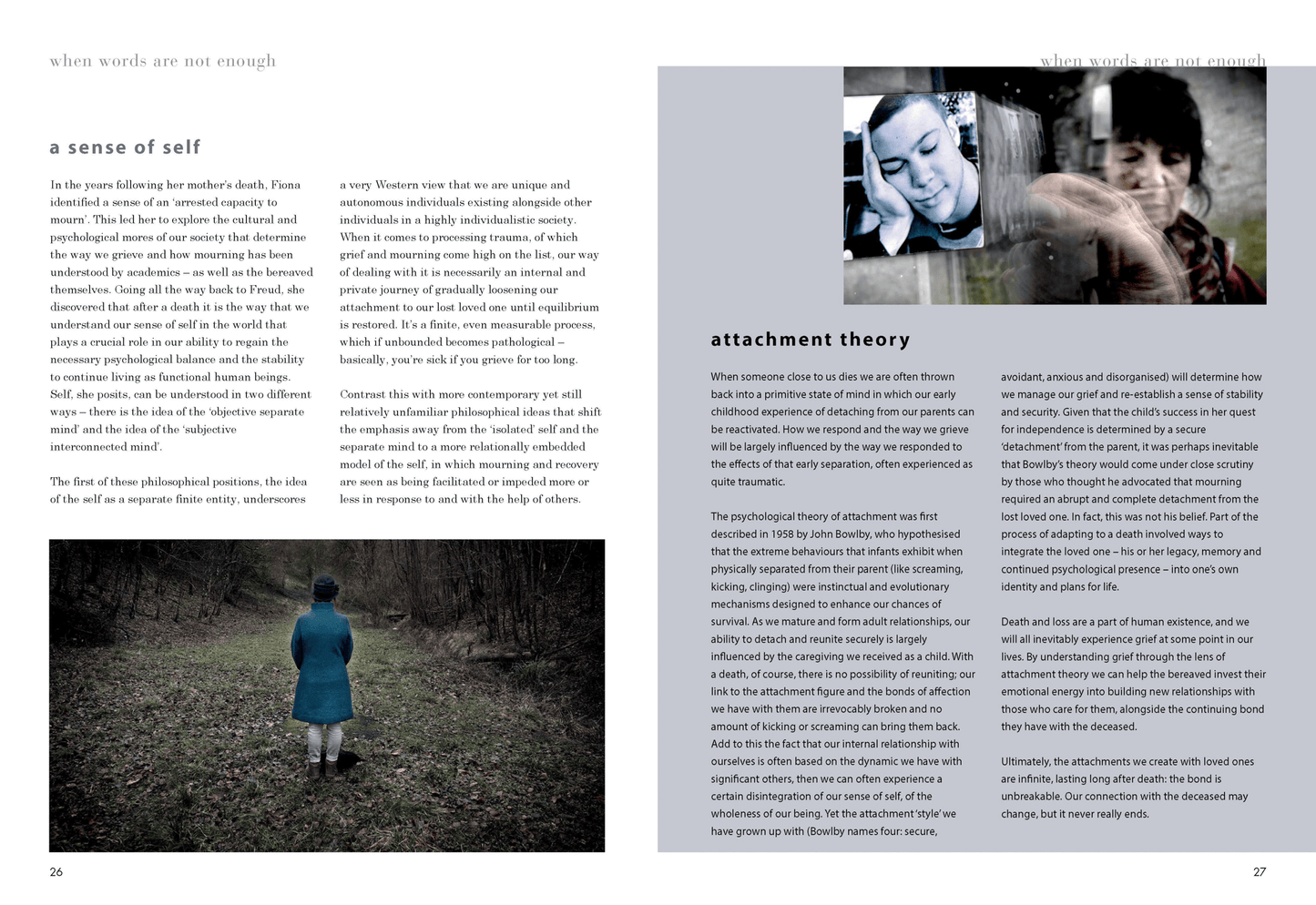
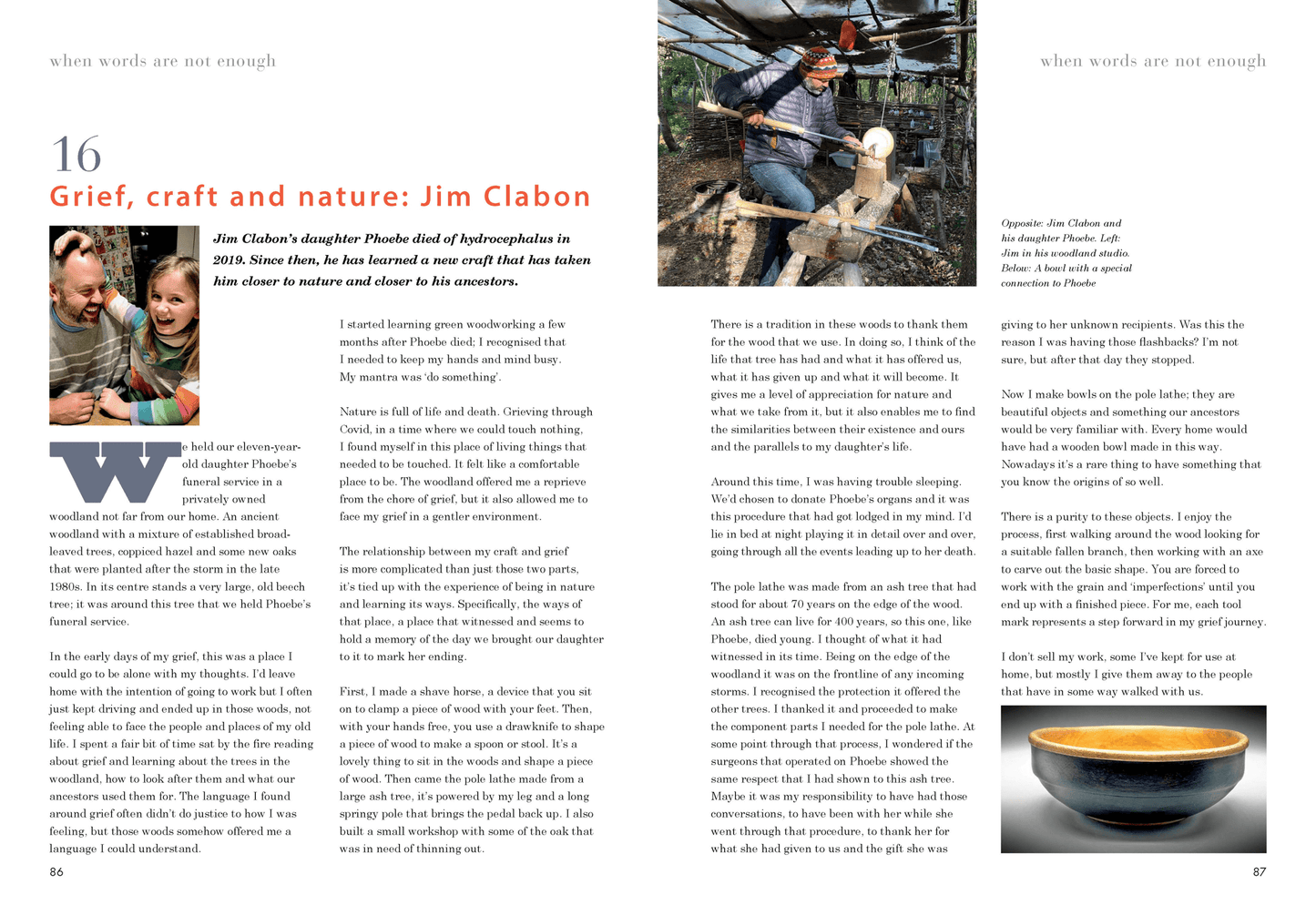
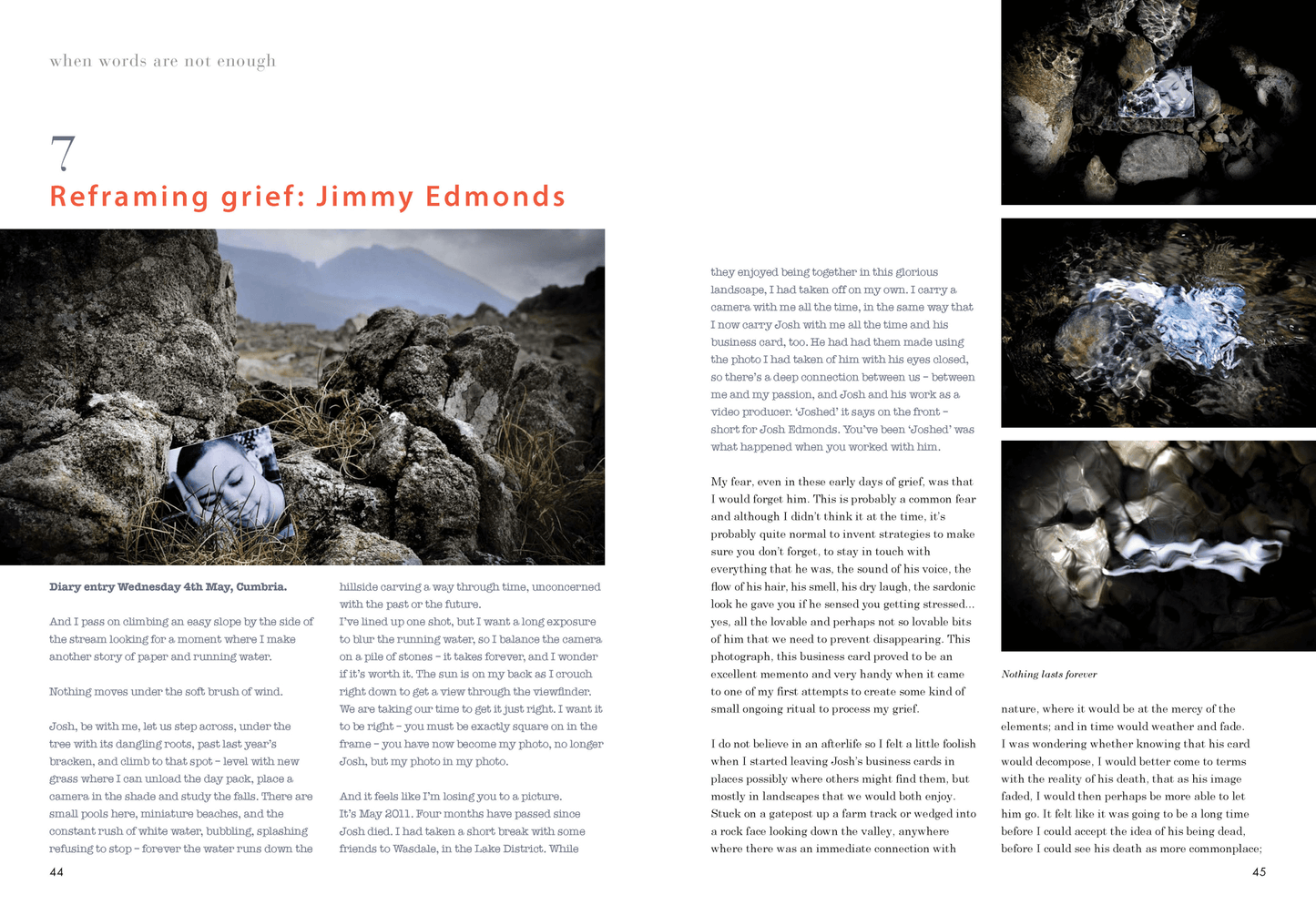
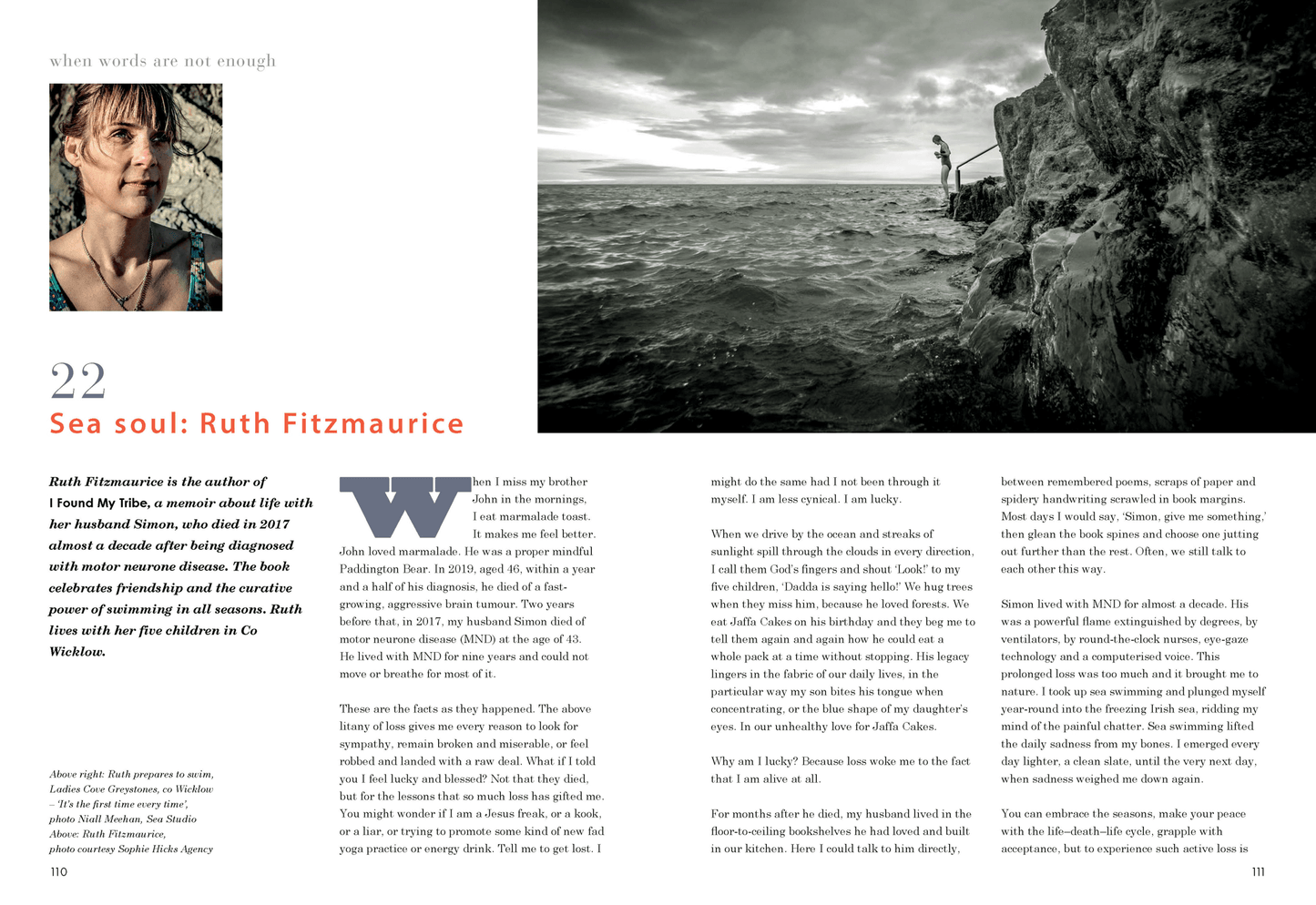
This book is framed by the story of its authors’ grief over the death of their son Joshua in a road accident in Southeast Asia. Since then, Harris and Edmonds have gone on to set up the charity ‘The Good Grief Project’ and run regular Active Grief Retreats. Much of the content of the book draws from the work and relationships that have resulted from their Active Grief Programme. Through describing their separate and joint responses to the tragic death of their son we are invited into the intimate spaces that hold both the painful darkness of their loss, and their continuing relationship with Joshua.In ‘When words are not enough: creative responses to grief’, photography and film making are presented as creative practices that can simultaneously engage, embody, and help transform grief. Images support the personal experiences described and these are juxtaposed with snippets of grief theory. This combination signposts to different ways people make sense of and cope with grief. Isolation and wordlessness -characteristic of bereavement- are beautifully described and set the scene for a journey through the “early dense fog of grief” p36 back into the world, made possible as the book’s subtitle indicates by engaging in creative activities and physical action. We are introduced to ideas of doodling, outdoor swimming, wood turning, poetry writing, painting, song writing and Ikebana (the Japanese art of flower arrangement); all ways that the bereaved parents, partners, sons, and daughters whose stories also fill this book have coped.This might seem a challenging book to open for those fearful of learning what it feels like to survive the death of someone you love. However, the brevity of the chapters, the power of the images, and compassionate storytelling make the topic accessible. Reading this book can only strengthen compassion and empathy in its readers. For those finding themselves in the tribe of the bereaved the book will provide valuable insights into the power and diversity of creativity central to the human spirit. Readers can follow up ideas in the bibliography, suggested further reading and resources at the end of the book. One omission is the acknowledgement of art therapists working in this area of creativity and grief; useful to know for those who might value some professional help to support them as they grieve creatively (See The Routledge International Handbook of Art Therapy in Palliative and Bereavement Care)'When words are not enough: creative responses to grief' is a beautiful, moving gem of a book and one I will recommend to my colleagues and clients seeking to understand loss and grief.
Very helpful while on the grief journey and learning how to live with grief. Gave me language and creative ideas for moving forward